
Leapfrogging the legacy core: what we heard at Seamless Middle East 2026
Some of the best conversations at Booth G60 this year...
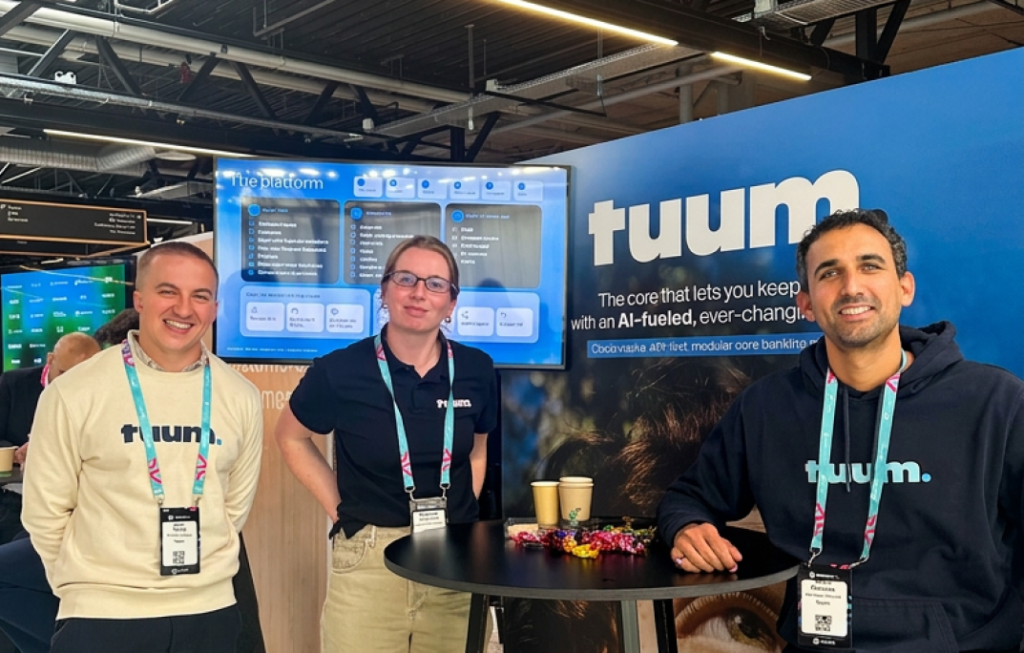
With Ryan Waters, Solution Consultant, Tuum
Agentic banking and stablecoins topped the agenda at MoneyLIVE Nordics. On the show floor, banks also wanted to talk about legacy cores, internal decision-making and how fast they need to move.
We asked Ryan what he heard, what surprised him and where he thinks the market is heading.
The mood was open and optimistic. It feels like retail banking in particular is reacting much more quickly to the technology shifts of the moment than it has to similar shifts in the past.
Most banks and fintechs are still very much in the process of understanding exactly where the opportunities with AI are, in a market that is (and always will be) highly regulated, with a complex ecosystem of service providers. Aside from the obvious top-of-mind topics like agentic banking and stablecoins, there was certainly an underlying spirit of collaboration and curiosity.
How we differentiate ourselves from the incumbent core platform providers, and how we can deliver value without a multi-year, multimillion-euro transformation program, overhauling the existing platform and starting from scratch.
The short answer is that banks don’t need to replace everything at once. Tuum runs alongside the existing core, so a bank can start with whatever needs modernizing most and leave the rest in place. Full core replacement can come later, if and when it makes sense for the bank.
Those conversations usually came after an occasional crash course in the origins of the name “Tuum” and our deep roots as an Estonian-founded company, for anyone not yet familiar with us. And, for a lucky few, a detailed review of the Spanish delicacies our EU Business Development Manager, Katherine Summers, brought along from Zaragoza!
Aside from the technology itself, the theme that came up with multiple large players running legacy cores was the complexity of decision-making and stakeholder management in large matrix organizations.
Many of the businesses we spoke to have grown organically over decades of M&A activity, partially completed consolidation exercises and rebranding. They have very complex architectures, and also many different IT system owners who all need to be brought to the table to make technology decisions. Often no single person can answer the question “how did we get to where we are?”
Inertia doesn’t come from technology alone.
Two did, actually: a conversation with an existing customer, and a talk I attended on the next evolution of digital money. Both were extremely educational on what’s happening in the stablecoin space, and they made me think differently about how much of the broader financial ecosystem is still largely untouched by the huge technology shifts of the past two decades.
Correspondent networks and cross-border money movements, especially in wholesale banking, still work much the way they always have. There’s still so much scope for innovation and efficiency gains there, and with the tokenization of money now firmly in the mainstream, the competition is only set to increase.
From a Tuum perspective, it would probably be that the lead in the next wave of banking products is still very much up for grabs, and the race is picking up pace. Incumbents absolutely recognize they need to work with more modern technology partners to deliver tangible improvements for end customers, and there are different trains of thought on how to do that.
Some want to provide great infrastructure and act as the platform layer for AI-native companies, who would own the customer relationship. Others plan to bring agentic capabilities into specific areas of servicing in a measured way, without changing the foundations of the business.
Either way, they’ll need a core that’s modular and API-first, so new capabilities can plug in without a rebuild. That’s very much where we see Tuum fitting in, whichever route a bank chooses.
Missed us at MoneyLive? Book a conversation with the team.


Whether you’re modernizing your core, launching new products, or exploring what’s next—we’re here to help. Get in touch to see how Tuum can support your vision.